“Take daily voyages into awe,” Robin Sharma writes in his book, the 5 AM Club. Isn’t that beautiful? I love how it emphasises the active participation of the person in awe. When you voyage into awe, you are not a passive receiver of the emotion. You do not exist in listlessness, hoping for awe to reach you by accident; you seek it. You are an adventurer pursuing beauty, an artist crafting it for yourself. Also, this is not a once-in-a-lifetime kind of sensation you need to reserve for a particular trip, but rather it is a feeling you can create daily – even on Tuesdays.
I’ve only been living alone for a full seven days, but already I’ve realised the importance of cultivating the skill of voyaging into awe. Honestly, this past week has felt like having an on-again-off-again relationship with an imaginary friend. One moment, I’m on top of the world, singing Taylor Swift and making pasta; the next moment, I am consumed by the realisation that no one is about to pop in and ask how my day went, bring me coffee or loiter irritatingly at my doorstep. Don’t get me wrong, I love the independence and the peace, but I guess I’m still easing into it. The feeling I’m talking about isn’t loneliness, exactly. Perhaps it’s more along the lines of the primordial angst written about by existential philosophers. Kierkegaard believed this feeling arises in the face of dizzying freedom when numerous possibilities paradoxically impede action. But honestly, it’s not that deep. It’s more a niggling sensation, an itch to get out and do something, but not necessarily with anyone. It’s a type of loneliness that lacks a desire for company but comes with a deep-seated urge to move and reconnect to the self. This feeling and I have grown quite accustomed to one another during my life, but it has been a more frequent visitor this past week. Wait a minute, I thought, while deep in the mountains on Saturday morning. This feeling not only goes away when I run, but it actually feels like a thirst being quenched. I realise now that whenever that pesky emotion nips at my heels, it’s urging me to get out and move. Go find the awe, it’s saying to me. I wonder if the entire history of western philosophy would have turned out differently if Sartre and Heidegger were runners. It’s pretty difficult to feel “primordial angst” and a runner’s high at the same time.
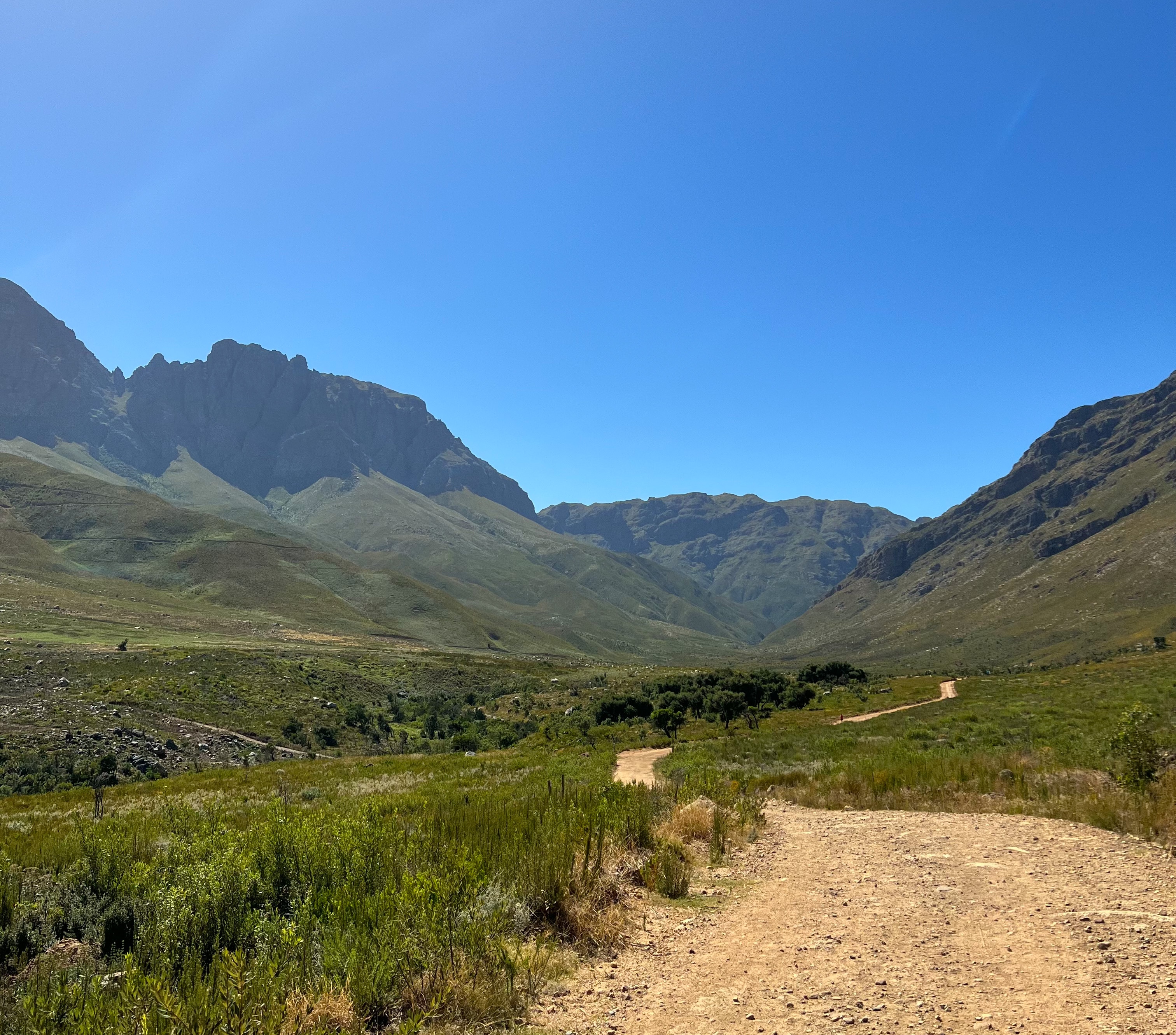
A group of people in history who did understand awe, though, was the Romantics. Romanticism was a movement in the arts that originated in Europe in the 18th century. It was chiefly characterised by an emphasis on imagination, subjective emotions and the notion of sublimity. Famous Romantic writers like William Wordsworth, Percy Bysshe Shelley and John Keats were absolutely obsessed with this idea of the sublime. The sublime, really, is just another word for awe, but their definition of it was less limited than our use of the word today. When we say “awe,” we mean, being amazed, wonderstruck or in admiration. For the Romantics, it meant feeling a reverential respect for something. Yet this feeling is fundamentally saturated by either fear or wonder, and often both simultaneously. Think of the word “awful” – it stems from being in awe of something, but in a less positive way. For the Romantics, a sublime experience made you confront the limits of your human understanding and abilities by bringing you face to face with awe. That’s quite scary if you think about it. This usually involved some grand sight in nature that accentuated human fragility yet inspired genuine creativity. I experienced some of this in Jonkershoek on Saturday when I went for my 15km long run in the nature reserve. Running through the valley, I kept arching my neck upwards, my gaze skirting the tops of the mountains that rose up on either side of me. When I arrived at the entrance gate earlier that morning, I was surprised to find what felt like half of Stellenbosch lined up to get in. Some wore running packs, others carried hiking sticks, and others were sporting cycling gear and mountain bikes. For a moment there, I smiled to myself, thinking, look at us; we’re all just a bunch of neo-romantics searching for our own sublime. You might cringe at the idea of buying someone flowers or having a candlelight dinner, but if you’re into outdoor sports at all, then guess what – you’re a Romantic. Think about it – being out in nature, exploring the limits of what the human body is capable of, feeling alive while fighting for your life on that uphill, but also feeling small amidst the vastness of the mountains. That’s sublimity right there. And if you think I’m forcing literary jargon onto sports, think again. The Romantics were quite literally trailblazers in the world of extreme sport. Hiking and mountaineering would not be a thing if it wasn’t for John Keats, who introduced the concept to the western world. Before him, trekking into the mountains for recreation was viewed as pure lunacy. Woods, caves, mountains, and all those eerie nooks and crannies of nature were seen as perilous. But Keats was in search of the sublime. He chose to venture into awe for the sake of being inspired. William Wordsworth had his own 19th-century version of the “hot girl walk.” He was famous for wandering along meadows and streams, dreaming up poems.
I have come to understand that there is something fundamentally poetic about exploring the limits of physicality. There is a probing in each of us that becomes apparent whenever we forget how it feels to be in awe. In our day-to-day lives, mundanity can often cover up the sublime. It lulls us into thinking there isn’t much more than waking up, working and washing the dishes. Perhaps that’s what the existentialists meant with “primordial angst,” a feeling of “is this it,” of not being quite at home in the world. When you feel like that, go voyage into awe. It does not have to be a huge endeavour. You could simply find a local park, sit in the sun and read. Run up a mountain. Visit an art gallery. Swim in the ocean. Turn your phone off for the weekend and watch the sunrise. Just remind yourself of this tender and beautiful world we live in and that it’s here for you to explore.
Did I just traverse three centuries, two different schools of thought and bridge the controversial mind-body divide in an attempt to explain why running makes me feel better when I’m in my twenty-something feels? Yes. Do I have any regrets? Absolutely not. You might call it angst, listlessness, loneliness, a fear of missing out, or a full-blown existential crisis. Whatever you label it, don’t run from it by numbing yourself. Embrace the emotion. Learn to recognise it as a desire for the sublime and a prompt to voyage into awe. Who knew writers, artists, philosophers, and runners were chasing the same thing all along. We’re all looking for that stomach flutter that teeters just on the edge of fear and excitement, that beautifully incomprehensible sense of wonder that drives humans to do crazy things like run marathons, climb mountains and write books. It’s not a once-off or a passive reception; it’s an active lifelong love affair with the world outside your comfort zone.





Leave a Reply