I didn’t think I’d be home again so soon, all fluffed up in big duvets, looking out at the gardens of Ouklip, listening to the familiar orchestra of early morning birdsong, dogs barking, the day happening slowly as it prepares itself.
I’ve been thinking a lot about death recently. And life. And how the two interact and feed off each other. We’re always surrounded by both. Within the presence of one lies the implication of the other.
I wonder if I would have done anything differently, had I known it was the last time I would see her.
I was on my way to a party, you see, dressed in a long satin dress, the bodice a shimmering sequence of emerald. The next morning I was scheduled to leave the gates of home before sunrise, bound for a long-haul flight first to Hong Kong, then to Thailand. So when late afternoon of that fateful day rolled around, I still hadn’t gone to say a proper goodbye to my grandmother. I was trying to pack for my journey and get ready for the party all at once.
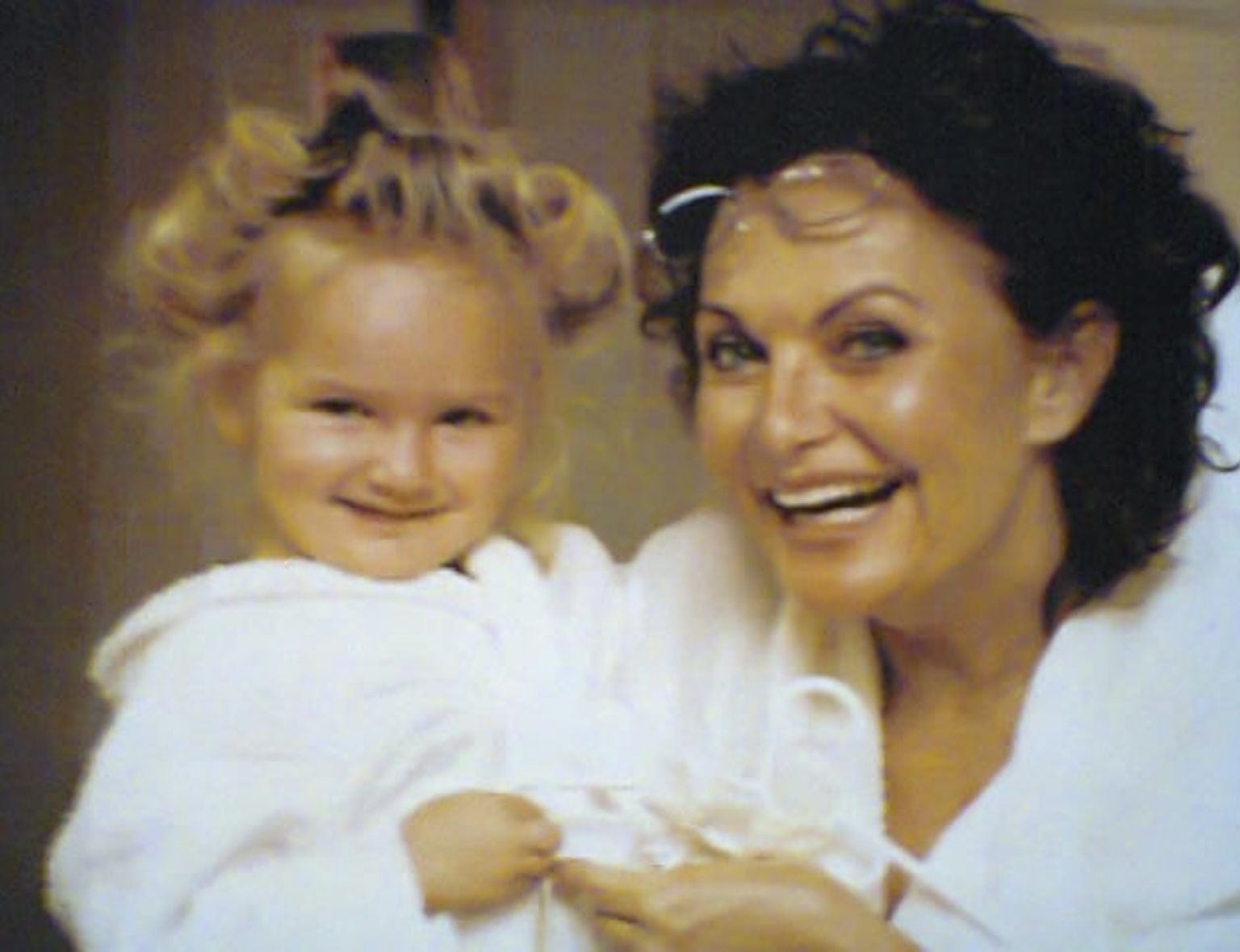
When I finally knocked on her door, I found her in tears, fully made up, arms jingling with bangles, even though she herself wasn’t going anywhere. She wanted to be pretty for me, she said, because she knew I would come knocking in my gown. Her lips were red, her eyes lined with dark blue, her hair neatly pulled back into a soft grey ponytail.
“Why didn’t you come earlier?” she asked. “I thought you were going to leave without saying goodbye.”
My heart clenched.
She’s been so fragile since my grandfather died. For eight months she has been a wreck of mourning. Hands constantly worrying around pictures of him. Words fluttering in and out of reach, sometimes sensical, sometimes not. One could scarcely spend an hour with her without feeling suffocated by her sadness.
Is that a horrible thing to say? Perhaps.
I loved her so much. I love her so much. But maybe we all have a limited capacity for other people’s pain. I was dealing with the loss of my grandfather myself, and now it seemed I needed to help carry my grandmother’s loss of a husband, too. I write this not to defend myself, but to try and untangle my own disconcerting, dizzying mess of emotion. Or maybe by making a case study of grief’s intricacies, I can attempt to intellectualise my way through a deeply personal loss. The whole song and dance of mourning is so tediously self-centred, isn’t it? But it can’t be helped.
It was difficult watching her go from the formidable woman she once was, running businesses, red hair blazing, to this wisp of a human. All bones and purple-hued skin and longing.
During that last visit home, she accused me of not loving her, or my family, because I travel so much. I didn’t know how to explain to her that I travel not for lack of love for my home, but out of an equal love for the world. Were we meant to be born and grow up and grow old in one place? She seemed to think so. I didn’t know how to be mad at her, but I was.
She equated love with geographical proximity. I equated love with freedom – the freedom to come, the freedom to go, the freedom to let one’s heart remain with loved ones even while your body is far away.
She was a complicated woman, my grandmother. Stubborn and fiery and ambitious and deeply giving. Her love was a blunt, pure, blinding, binding force.
So now I ask myself again: would I have done anything differently?
I had gone, hadn’t I? I had kissed the tears from her papery cheeks. I had stood patiently while she pleaded for me to stay, while she asked me again and again: when am I done? When am I settling down? When am I coming home, for good?
I never quite knew how to tell her that I had no plans to do any of those things. It would have broken her heart.
Nor did I know how to tell her that I am stubborn and fiery and ambitious too, and that no matter how often she asked me to stay, no matter what she accused me of, I am ashamed to not be ashamed to admit that I wouldn’t have stayed.
So what now? Where do I go from here? What do I make of this strange maelstrom of grief and nostalgia and ambivalent remorse… and this overwhelming sense that none of it is quite real?
Even now, as I prepare for her funeral tomorrow, I find myself flung from one emotion to the next. From an aching chasm of loss to a shameful feeling that I’m play-acting at grief, because surely she isn’t actually gone. As if I’m the only one in on the joke. As if she’s simply hiding herself away in her little house across the garden, giggling with glee as she watches and judges everyone’s display of mourning.
I feel absolutely certain that if I picked up the phone right now and video-called her, she would answer in her customary state of disarray, as if she were always just coming from somewhere. Seemingly surprised by both the call and her own ability to navigate this strange cellular technology. She would hold the phone far too close to her face, so that all you could see was one eye. Blue and deep and hopeful.
“Karretjie?” she would say, breathless. “Wanneer kom jy huistoe?”
When are you coming home?
Always that question. Inescapable. Suffocating.
Please forgive me. I won’t dishonour my grandmother now by being polite and dishonest. Our love for each other worked its way into the bones of my life. It was seismic. Foundational and shaping. But like any love worth writing about, it was not without complication. That is what gives it depth, isn’t it?
I’ve never known a love like hers. When I visited, she would make me pose for hundreds of photographs. She wanted to remember the curl of my hair, the way the light fell on my face, my outfit, my smile. For when I was gone again.
Now she’s the one who’s gone. Supposedly. How is that possible? One day she’s accidentally putting my seventh-grade report card on her WhatsApp status. The next, my messages don’t even show as delivered.
Ouma?
Ek is so jammer.
Ek is so lief vir jou.
Wanneer kom jy huistoe, Ouma?
When are you coming home?
I want to walk over to her house, curl up on her bed, put my head on her chest, and press her crooked fingers to my lips. I want to make us a cup of that awful instant coffee she and my grandfather loved so much.
Yes.
Yes, I would have done so many things differently. I would have held her longer. Gone to see her earlier. Called more in the months since I left. I wish I had skipped the party altogether and lain beside her all night, listening to stories about my grandfather.
I want to say I’m sorry. But how does one apologise for living life in the way that feels right at the time? For living a life that makes you happy?
There are so many things I’ll never get to tell her now. Like how it feels to swim with manta rays. Or sleep in a hammock on a deserted island. Or drink masala chai on a rooftop in India.
I want to ask her about her travels when she was younger. How they made her feel. If this restlessness – this need I have to see everything all at once – is something I inherited from her, or maybe from her mother. Where does it come from? I want to ask her if her heart also mended and broke at the same time when my grandfather looked at her. Is that normal, Ouma? Is that love? I want you to meet him, the man who healed my heart. You would have liked each other. He also thinks I’m stubborn.
So what now? How do I say goodbye when you’re already gone, but haven’t quite left yet?
How does one live with a death when you don’t even know what death is? What is living, if not the slow, beautiful procession toward oblivion?
If that sounds bleak, forgive me. But I don’t find it bleak. I find it freeing. There is peace in not knowing. In the seemingly senseless coming and going of bodies and breath.
I will say none of this at the funeral, of course. Funerals are for celebration of the deceased’s life. For religious platitudes and long, awkward conversations with distant relatives you forgot existed.
This here is something else. This is me allowing myself the self-centredness of working through the jagged texture of my own grief. Tomorrow I will honour her by participating in the ritual the way it’s meant to be held. But for now, allow me this.
Wanneer kom jy huistoe, Ouma?
I’m here now, but you’re not.







Leave a Reply