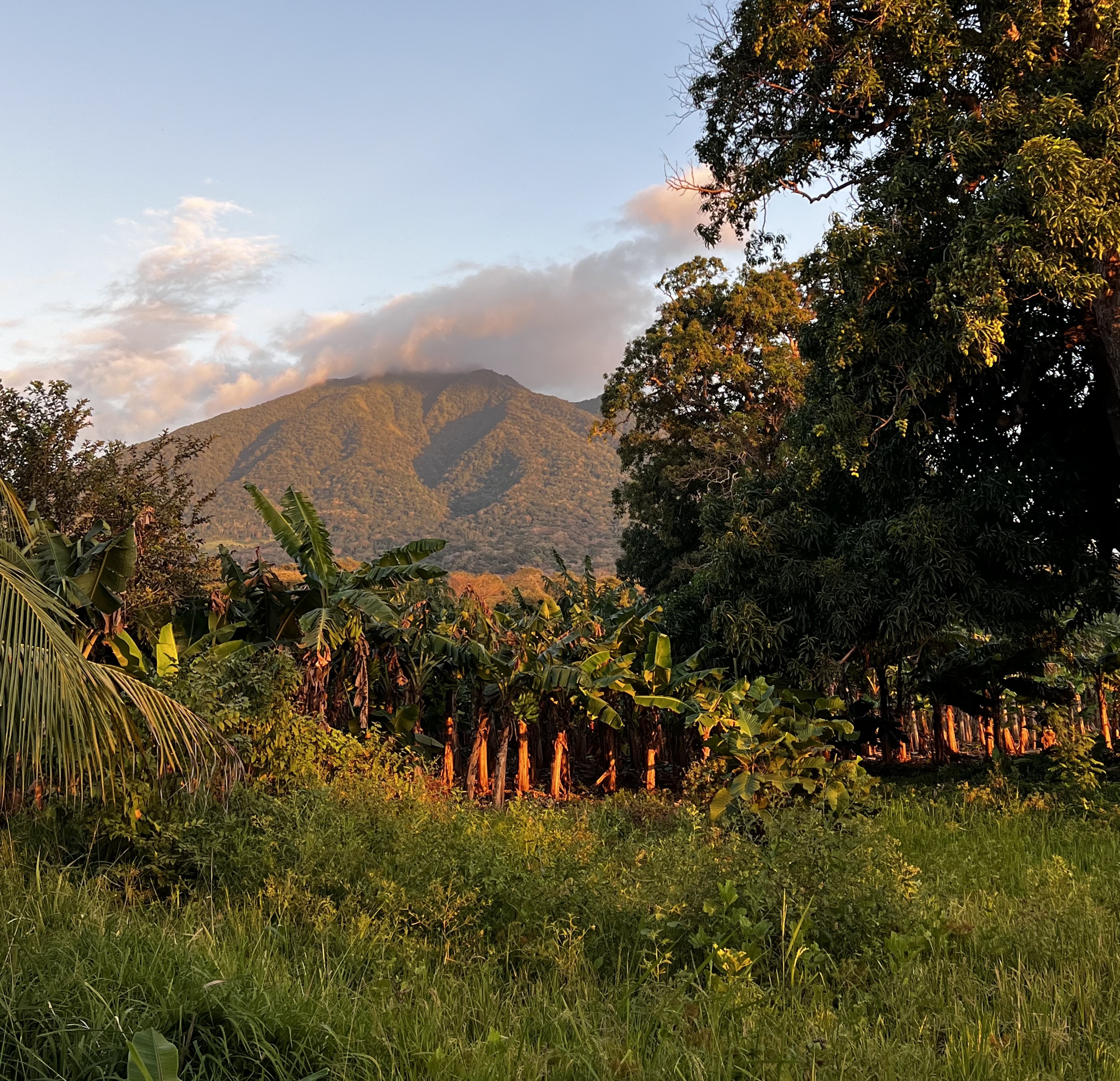
Ometepe is hot and green. The world here moves differently, the energy hums beneath the earth—you can feel it from the moment you step off the ferry, salt-crusted and swaying as if it, too, is relieved to have made it all the way from San Jorge across the choppy Lago Cocibolca. The twin volcanoes loom above, wrapped in mist some mornings, blazing under the sun in the afternoons.
The roads are rough, the kind that make your bones rattle as you navigate over rocks on a motorbike, but nobody seems to mind. On my very first day, a teenage boy handed me the keys to one without hesitation, letting me rent this high-speed liability despite the minor details of my expired license and complete lack of experience. No paperwork, no warnings—just a grin and a casual “todo bien.” In Latin America, that can mean anything from “all good” to “don’t worry about it,” but in this case, with his smirk, it clearly translated to: “You’ll figure it out.”

There’s a lightness about people here—not just in the feathery way they move, but in the way they carry themselves, unburdened. A kind of effortless presence, as if they’ve learned to exhale more than they hold in. The jungle breathes around us, lush and unhurried. Cicadas hum in the heat, howler monkeys call from the treetops, and in the evenings, fireflies flicker between the leaves like tiny, pulsing stars.
It feels good to be close to the earth, to eat food that was pulled from the ground only hours before, to drink water that has filtered through volcanic rock. Everything here nourishes me—my body, my mind, my soul, my creativity.
I’m staying at El Zopilote, a permaculture farm on the eastern side of the island. Nights here are filled with the sounds of djembes and didgeridoos around a fire. Everyone walks around barefoot and toddlers climb trees butt naked. We sleep in wooden huts nestled in the mountains, use compost toilets, and shower under the open sky with jungle leaves brushing against our skin.
Life here is simple, raw, unfiltered.

Yesterday, in the midst of the late afternoon Nicaraguan heat, I did a breathwork class up in the shala, perched on the slopes of Volcán Maderas, where the jungle hums and the air feels thick with something ancient.
Twenty people with dirty feet, lying shoulder to shoulder, just breathing together for three hours. Maybe that sounds ridiculous. It probably would to most people. But it’s interesting where the mind goes when there are no distractions, when there’s no conversation to steer you away from yourself. No screens. No tasks. Just the inhale, the exhale, and the unbearable vastness of being inside your own body.
At first, it was just breathing. Long, rhythmic, measured. But then it became uncomfortable. It felt like dredging something up from the deep. Some people started laughing. Others cried—softly, then openly. A few screamed. Around me, people were sinking into themselves, wading through their own ghosts.
For the first time in my life, there was nothing to do but exhale.

Memories flitted in and out of my consciousness, appearing and dissolving like mist. I was nine years old again, standing under a hoop, throwing a netball, getting angrier every time I missed. I could feel that anger in my chest as if no time had passed. I thought of my mother. My grandmother. The intergenerational love and aches that live inside me, passed down through blood and bone. And then, from somewhere deep, a fear surfaced—a fear I hadn’t even named before. The fear of being trapped. Trapped in one place, in one life, in one version of myself.
And so I cried. Two hours in, that was all I could do. Cry. Let it wrack through me, let it strip me bare. The woman who hosted the class knelt beside me, her tumbles of dark curls brushing my neck, her knowing eyes catching the last of the dying light. I felt her hand on my head, then on my cheek.
“Breathe through it, guapa,” she whispered, her voice soft, but certain, like she understood exactly what was happening. Like she had been here too.
Up there in the shala, away from everything that is comfortable or familiar, there was nothing to do but release. Let go.
And then, suddenly, there was quiet. A long, empty exhale that left my body hollowed out and weightless. As if everything had been wrung from me—all the tightness, the restlessness, the unseen things I’d been carrying. What remained was love. Love and breath and a palpable sense of connection, to the earth, to the humans beside me, to something infinitely larger than myself.
I walked away from that experience feeling lighter, as if I had been emptied out and refilled with something quiet and true. It was a lightness that comes from realising how much I’d been holding onto without even knowing it. Memories, tensions, unspoken fears that had lodged themselves into my body over years. And it struck me: we talk about letting go as if it’s a decision, a switch we flip in our minds. But real release is physical. It’s in the breath, in the body. Sometimes, you have to physically wring something out of yourself before you can truly be free of it.
I don’t think we give ourselves enough chances to do that. We go through life accumulating—experiences, identities, expectations—without ever making space to empty out. To exhale completely. Maybe you don’t need to travel to a remote Nicaraguan jungle or spend hours in breathwork to access that, but you do need to pay attention. To notice when the weight is building up. To find moments, however small, to sit with yourself, to let the discomfort surface and to face it—fully, without flinching—until it loosens its grip.

That night, due to a mix of unforeseen circumstances (mostly of my own doing), I ended up sleeping in a hammock under the open sky. The island was alive around me. After having left the class, my breath felt magnified. I could hear it moving through me. Lying there, staring up at the stars spilling across Central America, I felt as though I was breathing with the earth itself as time stilled and night wrapped around me.
So, if you’re ever feeling particularly overwhelmed, close your eyes. Breathe through it, guapa. Breathe until all that’s left are the trees, the birds, the dirt between your toes, and the air in your lungs.
You are here now.
Exhale.




Leave a Reply